
Walled Garden Update
‘The Best Time Is When You Have Time’
After a mild November and December, the cold finally arrived. Garrulous, barrelling crows wheeled across an ashen sky and the ground froze solid for a full week, forming a great unworkable crust. The cold permeated the soles of my shoes meaning standing still was not an option but luckily, there’s not a lot of that going on at the moment. We took this opportunity to give the grapevines their winter prune, cutting away almost everything that grew last summer to leave a rough knotty cord spanning the roof of the glasshouse. This year for the first time we also stripped the shaggy bark from the vines which is said to lower the pest and mould burden, and leave a cleaner environment for the vines to grow in. I strongly suspect this is one of those pieces of advice that is a hangover from the Victorian infatuation with hygiene in the garden, but it will still be interesting to see if it makes a difference.
Despite acquiescing on this occasion, I’m interested in interrogating conventional advice to see if there is a way of doing things that is more in line with both the time that I have, and a more modern approach to gardening. The important thing is to have one foot in the theory and one in your practice, and your mind in the liminal space between. This is what allows you to think critically to join the theoretical and the practical, and is an area of philosophy known as praxis, or the process of theory-practice-theory that anyone working with their hands will be intimately familiar with. In short, praxis is asking you to understand the essence of what you’re being told rather than sticking rigidly to the dogma. Having spoken to some of those responsible for writing technical pages for well-known horticultural organisations, it was interesting to note that they themselves don’t usually follow their own advice. Rather, they write it in a way they feel will be most useful to most people because nuance tends to overwhelm.
This has been on my mind this week as we spread mulch onto frozen soil, which the textbooks will tell you not to do as you’ll seal in cold. On the surface, this seems sound but in reality winter is when you have time to do this, and I have observed erstwhile frozen soil improve rapidly with the application of a good mulch. In short, the benefits outweigh the drawbacks for me, but perhaps if you were growing plants that were more sensitive to cold then the results could be different. Perhaps this is where praxis meets pragmatism, or as Christopher Lloyd once said: sometimes the best time is just when you have the time.
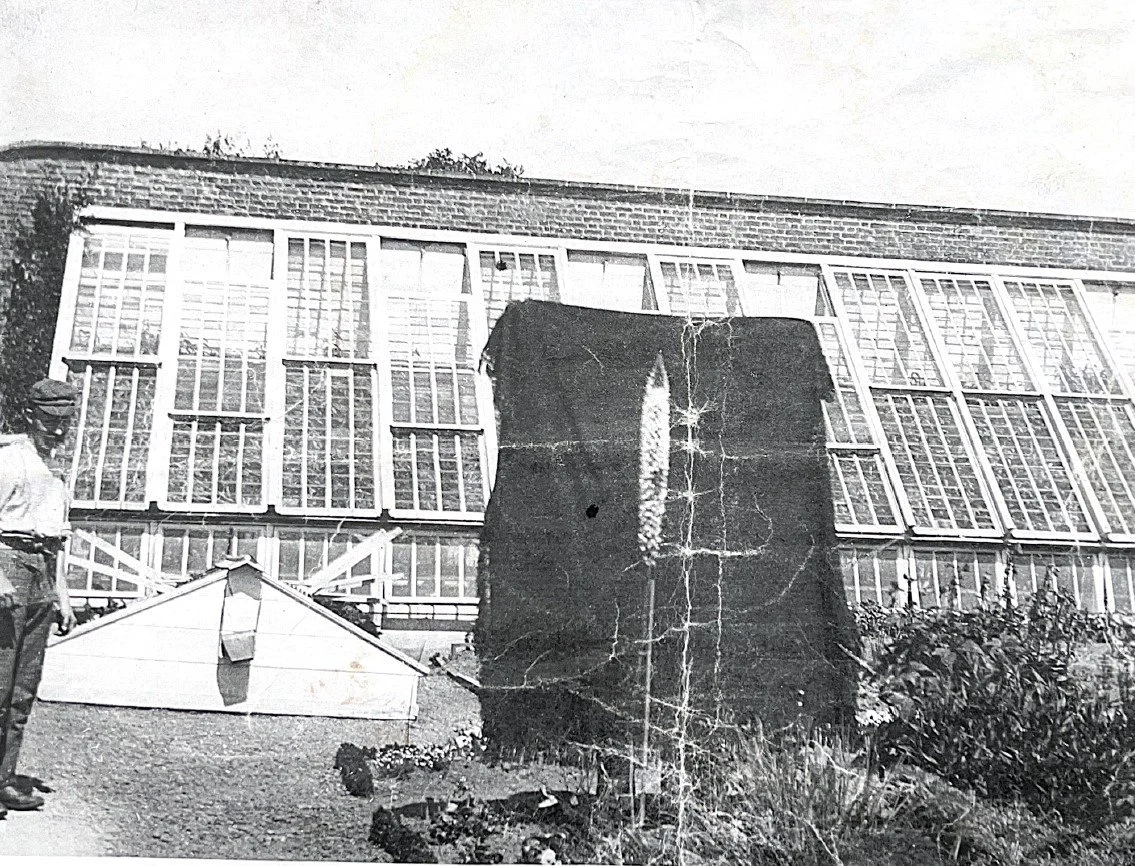
Once the soil defrosted, the last few bulbs went into the ground which included Eremurus ‘Romance’, kindly gifted to the garden by Mr. Maxwell. It felt nice to be planting these as there is evidence to show Eremurus thrived here at one time under Celia Margaret Callander – one of the garden’s great architects – and may have been some of the first grown in Scotland, having been introduced to Europe in 1874. Typically, you are advised to grow these on a mound of grit but I am reminded of a written account of a visitor to a long-untended walled garden, who found a grassy slope covered in self-seeded Eremurus, none of which had the gardener’s careful hand depositing a dollop of grit under each seedling. For that reason we’ve dispensed with that advice, and have instead planted some at the foot of a south facing wall, and some further into the garden as a test. You can ask me next year which ones survived!

Now that it’s a few degrees warmer I’m dying to be outside so will say cheerio for now, but not before I let you know that we once again have our wildly popular Snowdrop Weekend coming up on the 14th and 15th of February, in aid of My Name’5 Doddie Foundation. I’ll be manning the gate at least one of the days so please do come and say hello but until then I hope you manage to stay warm and above all else, pragmatic.
Kate